
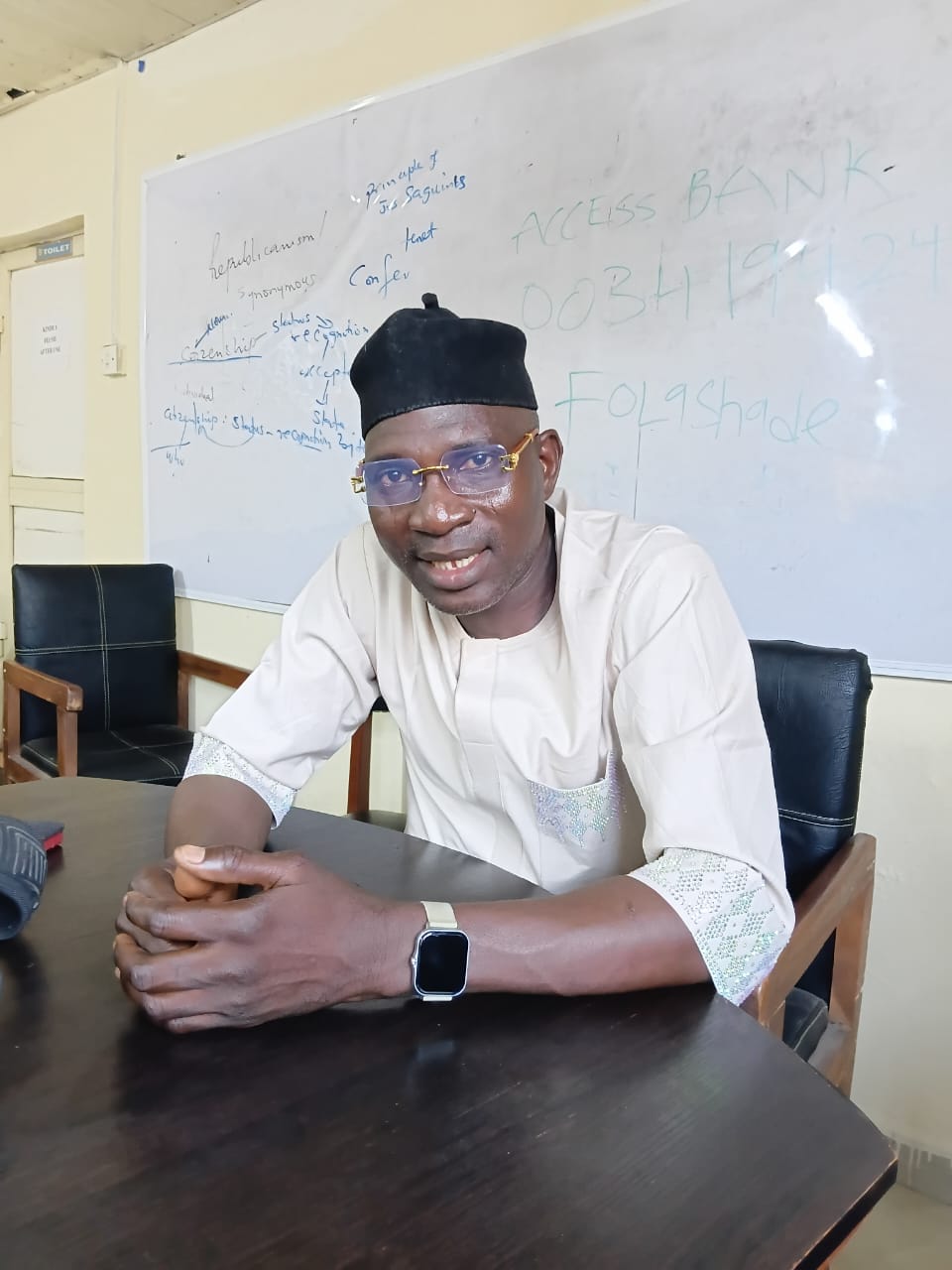
By Olusola Aliu
Nearly fifty years after the creation of Ogun State, one political reality remains striking: the Yewa axis has never produced a governor of the state. Since the state was carved out of the old Western Region in 1976, power at the highest level of the state government has consistently rotated between Ogun Central Senatorial District and Ogun East Senatorial District, leaving Ogun West Senatorial District—home to the Yewa and Awori people—perpetually on the margins of gubernatorial power.
This historical imbalance has gradually transformed from a political observation into a major issue of justice, fairness, and democratic inclusion in Ogun State politics.
A Historical Pattern of Exclusion
When Ogun State was created during the administration of Olusegun Obasanjo, the expectation was that the new state would foster balanced political representation among its diverse groups. The first governor, Saidu Ayodele Balogun, presided during the military era before the transition to civilian rule.Since the beginning of democratic governance in 1979, leadership of the state has largely alternated between leaders from Ogun Central and Ogun East. Prominent among them was Olabisi Onabanjo during the Second Republic. Later administrations included Gbenga Daniel from Ogun East and Ibikunle Amosun from Ogun Central. Today, the state is governed by Dapo Abiodun, also from Ogun East. What is remarkable in this sequence is not merely who has governed, but who has not. The Ogun West axis—despite being a major political and economic bloc—remains the only senatorial district yet to produce a governor since 1976.
The Yewa Political Question
For decades, the people of Yewa have raised concerns about what they perceive as political marginalization. The region, with important towns such as Ilaro, Ota, Imeko and Ayetoro, plays a crucial role in the state’s economy, particularly through commerce, agriculture, and cross-border trade with the neighbouring Republic of Benin. Yet political leadership at the highest level has consistently eluded the region. This has given rise to what many commentators now describe as the “Yewa political question”: why has an entire district been excluded from the governorship for nearly five decades?
The question has grown louder in recent years, particularly as Nigeria continues to emphasize the principles of inclusiveness and balanced representation in governance.
Political Aspirations and Missed Opportunities
The story of Ogun West’s quest for the governorship is not one of passivity. Several capable politicians from the region have contested for the position. Among them are figures such as Gboyega Isiaka and Adekunle Akinlade, both of whom mounted serious campaigns in recent electoral cycles.Despite their strong local support, these bids were unsuccessful. The reason lies partly in the broader electoral arithmetic of the state. Governorship elections require statewide appeal, and historically the political alliances and voting patterns have favoured candidates from the other two districts.
Another challenge has been internal political fragmentation within the Ogun West bloc. Divisions among political leaders have sometimes weakened the region’s collective bargaining power within major political parties.
The Equity Argument
In Nigerian politics, the idea of zoning or power rotation has long served as a mechanism for maintaining stability in multi-ethnic and multi-regional environments. Although not always formally codified, this principle has often been used to ensure that no group permanently dominates political power. Within this context, many observers believe that Ogun State has reached a moment when equity demands a reconsideration of its leadership pattern. After nearly five decades, the argument that Ogun West deserves the opportunity to produce a governor has become increasingly difficult to dismiss. The issue is not merely about regional pride. It is about the broader principle of political inclusion. Democracy thrives when every segment of society feels represented in the structures of power. Persistent exclusion, even if unintended, can weaken public confidence in the political system.
A Test for Ogun’s Political Maturity
The question of a Yewa governor is therefore more than a regional campaign slogan. It is a test of the political maturity of Ogun State. Will the state continue with a pattern that leaves one district perpetually outside the circle of executive power? Or will political actors—particularly the major parties—begin to deliberately create opportunities for broader representation?
Ultimately, the answer will depend not only on the aspirations of Ogun West but also on the willingness of political stakeholders across the state to embrace a more inclusive political future. Nearly fifty years after the creation of Ogun State, the governorship journey of Yewa remains untravelled. Whether the road will finally be taken in the years ahead is a question that will continue to shape the political conversation in the state.
And when that moment eventually arrives, it will not merely mark the victory of a region; it will represent the triumph of fairness in the evolving story of Ogun State’s democracy.
Olusola Aliu
Lecturer, Department of Political Science and International Relations, writes from Soyoye, Abeokuta.