
By Edunright Interns
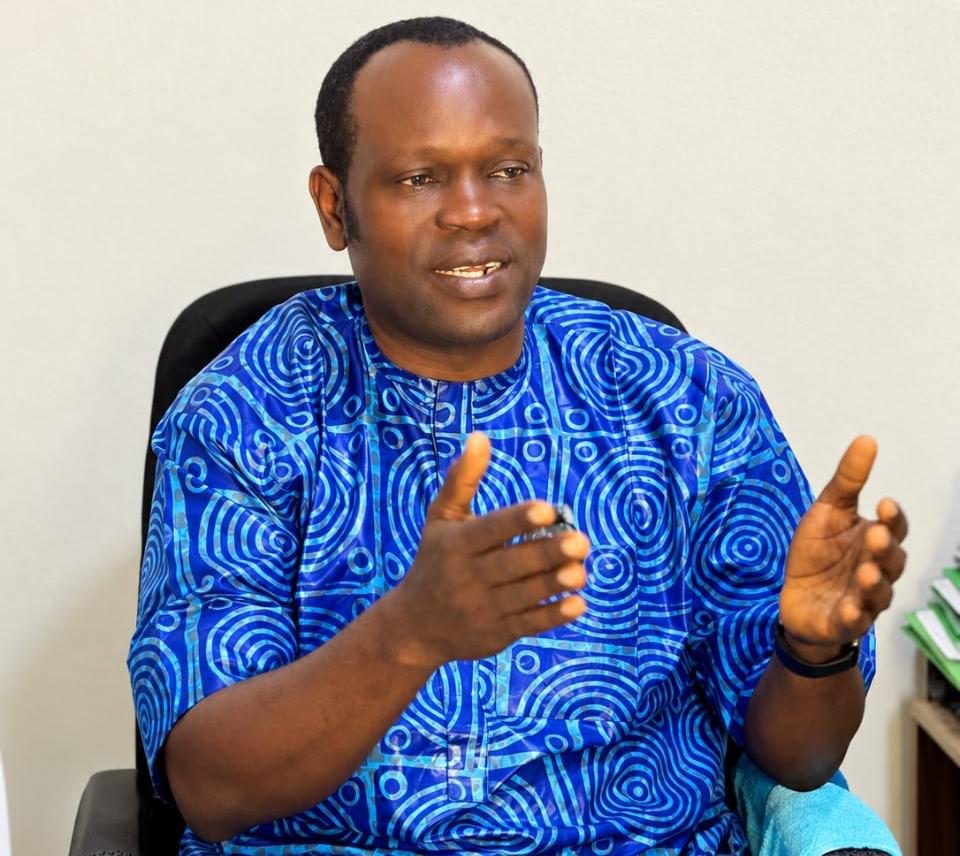
The Director of Student Affairs (DSA), Gateway ICT Polytechnic, Saapade, Dr Musari Adedayo Akeem, has warned students against cultism and indecent dressing, assuring them of the institution's commitment to protecting their welfare and addressing their complaints.
Dr Musari gave the warning during an interview with student journalists of Edunright Media at his office on Wednesday, urging students to report their grievances promptly to enable the Directorate to address them before they escalate.
“What we always tell students is that whenever they have issues, they should report them as soon as possible so that they can be addressed easily,” he said.
He explained that the Directorate of Student Affairs serves as an intermediary between students and the institution's management, as well as between students and members of their host communities.
Speaking on the common complaints received by his office, Dr Musari identified house agent fraud as a major concern, particularly at the beginning of a new academic session when newly admitted students seek accommodation.
He said some students had fallen victim to fraudulent agents and caretakers, adding that the Directorate intervenes by inviting the landlords or agents involved to resolve such disputes. Cases that cannot be settled through mediation, he noted, are referred to the police for further action.
The DSA listed other complaints to include fighting among students, minor disagreements, phone theft, bullying and relationship-related conflicts. He explained that minor disputes were usually settled amicably, while serious cases, particularly bullying and assault, were referred to the Students' Disciplinary Committee for appropriate action.
He warned that the institution would not tolerate cultism or physical attacks on fellow students, stressing that offenders risk expulsion and prosecution. He added that students involved in cult-related activities would be handed over to the police.
On security, Dr Musari described insecurity as a national challenge and urged students to embrace the principle of “If you see something, say something” by reporting suspicious activities to the appropriate authorities.
He expressed concern that some students live in remote and isolated areas where their whereabouts may be unknown to the institution's management and members of their host communities, exposing them to security risks, including robbery and kidnapping.
To address the situation, he disclosed that the institution's management had held a security meeting with the Area Commander and Divisional Police Officers (DPOs) in Ode, Isara and Ipara communities to strengthen collaboration between the police and local security outfits.
“We advise our students to be security-conscious, avoid unnecessary late-night movements and live moderately. They should also report suspicious activities because security is everybody's responsibility,” he said.
Dr Musari commended the Students' Union Government (SUG) President, Comrade Akinpelu Bukunmi Timothy, and the Rector, Dr Kehinde Oseni, for their prompt responses to security emergencies, including incidents that occurred at midnight.
The DSA also reiterated the institution's position against indecent dressing, listing leggings, bum shorts, sagging trousers, crazy jeans and wearing slippers to lectures among the forms of dressing prohibited under its rules.
He warned that students who violated the dress code risked being sent out of the academic environment, adding that students were expected to dress appropriately and uphold the institution's standards.
He further cautioned that indecent dressing could expose students to harassment and other security risks, recalling past incidents involving students.
Addressing concerns that reporting cultism to the police could damage the institution's image, Dr Musari maintained that expelling and prosecuting offenders would strengthen public confidence in the Polytechnic's commitment to student safety.
Speaking on practical learning, he described Gateway ICT Polytechnic as a practice-oriented institution regulated by the National Board for Technical Education (NBTE), noting that students across departments participate in fieldwork and practical exercises to develop relevant skills.
He added that the institution runs an entrepreneurship development programme offering training in more than 12 vocational skills, including tailoring, solar installation, graphic design, photography, electrical work and content creation.
According to him, external artisans and professionals are engaged to train students and equip them with practical knowledge that could help them establish businesses and become self-reliant after graduation.
“All thanks to the most dedicated and industrious Rector, Dr Kehinde Oseni, for all the achievements and beautiful ideas we are implementing at Gateway ICT Polytechnic, Saapade,” he added.
On the perceived disparity between Higher National Diploma (HND) and Bachelor of Science (BSc) qualifications, Dr Musari said polytechnic education provides students with the knowledge and practical skills needed to succeed in their chosen careers.
The DSA, who disclosed that he holds a National Diploma (ND), Higher National Diploma (HND), Postgraduate Diploma (PGD), two Master of Science (MSc) degrees and a Doctor of Philosophy (PhD), urged students not to allow the perceived dichotomy to limit their ambitions.
He expressed optimism that government efforts would help address the disparity between university and polytechnic graduates, advising students to focus on competence, hard work and continuous self-development rather than certificates alone.
Recalling his academic journey, Dr Musari said he completed his polytechnic education without a carryover through hard work and determination.
He also disclosed that the Directorate works with the Guidance and Counselling Unit to address students' academic, financial and personal challenges, including cases involving those considering withdrawing from school because of financial difficulties or problems at home.
He urged students to manage their time effectively, expressing concern that excessive engagement with social media was affecting their concentration and academic performance.
Sharing his personal experience, Dr Musari revealed that he lost his father in 1991, while his mother battled illness for seven years during his ND and HND programmes.
Despite these challenges, he said he supported himself through graphic design and maintained a disciplined reading schedule, studying between 1 am and 3 am daily.
He encouraged students to remain focused on their studies, manage their time wisely and explore legitimate opportunities to support their education.
Dr Musari urged students to approach the Directorate whenever they had complaints or needed assistance, dismissing the perception that the DSA's office was a “killing squad.”
“The Directorate is not a killing squad. We are here to listen to students, address their complaints and ensure peace within the institution. Students should not be afraid to approach us whenever they have challenges,” he said.
He also encouraged students to report their concerns without fear, obey the institution's rules and cooperate with the management to maintain a safe, disciplined and conducive learning environment.